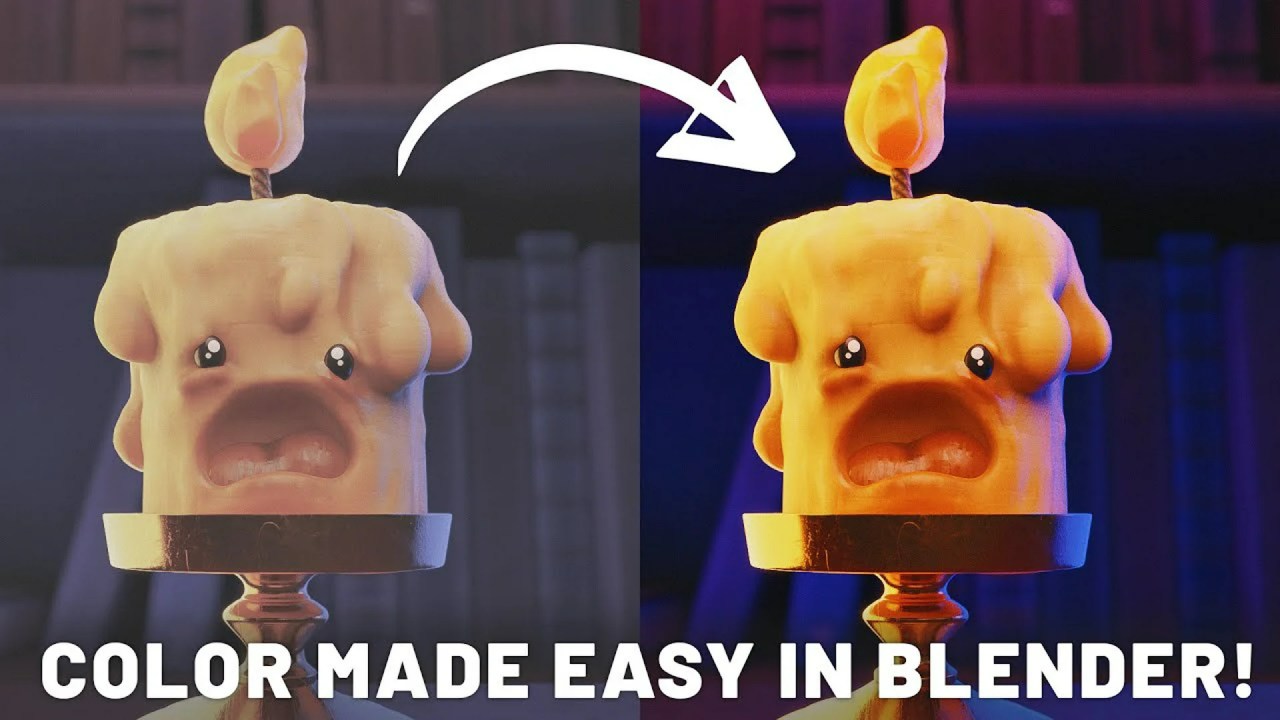
SouthernShotty provides five powerful, practical tips to dramatically cut down environment render times in Blender. Learn how leveraging 2D cheats, implementing dynamic Level of Detail (LOD), strategic culling, and optimized fog techniques can accelerate both Cycles and Eevee without compromising visual fidelity.
Rendering large, complex 3D environments often leads to frustratingly long wait times, even with powerful hardware. For artists focusing on stylized worlds, cozy fantasy scenes, or cinematic shots, optimizing efficiency is crucial. Expert creator SouthernShotty tackles this common pain point by outlining five essential techniques that can significantly speed up your pipeline, sometimes resulting in renders that are twice as fast.
SouthernShotty emphasizes that the core strategy is learning where you can cheat without sacrificing the overall look of the scene. These methods, designed for both Eevee and Cycles, focus on reducing the amount of geometry and calculation the renderer needs to handle.

1. The Ultimate Cheat: Integrating 2D Assets
The most effective way to save render time is by avoiding the need to render complex 3D geometry altogether. SouthernShotty recommends using 2D images and videos for distant elements, backgrounds, or particle effects (like dust or fish). This instantly adds depth without bogging down the scene file.
A powerful extension of this technique is making those 2D image planes react realistically to your scene’s dynamic lighting. By rendering the 3D asset twice—once for the base color and once for the normals (using the Workbench engine’s MatCap set to Normals)—you can import the resulting normal map image onto the 2D plane. When set up correctly, this allows the flat asset to receive lighting and shading based on its perceived surface, mimicking 3D geometry.
For quick and diverse background elements, stock footage and assets are invaluable. SouthernShotty highlights the benefit of using resources like Storyblocks to source high-quality background images and videos instantly.
2. Implementing Dynamic Level of Detail (LOD)
LOD systems are standard in professional production and game design workflows, ensuring high-detail geometry is only used when the camera is close to an object. In Blender, this powerful optimization is accessible through Geometry Nodes.
LOD via Geometry Nodes
The Geometry Node setup measures the distance between the camera and the object. Using a simple *Switch* node, the system instantly swaps out the high-polygon version of an asset in the foreground with a low-polygon or even a 2D card version as the object moves further away. This dramatically cuts down on the geometry Cycles or Eevee must process in the background without any noticeable visual degradation.
3. Mastering Camera Culling
Camera culling ensures that geometry that is completely outside the camera’s viewport is never rendered. This technique can drastically improve performance, particularly in wide-open environments. There are two primary ways to implement this:
- Cycles Simplification: In the Render Properties panel, enabling Simplify and checking Camera Culling under Visibility will tell Cycles to automatically ignore hidden objects. Setting a small offset value is key if your camera is moving rapidly, preventing geometry from popping in.
- Procedural Culling: For complex procedural systems driven by Geometry Nodes, the native Cycles culling may not work. In these cases, you must implement the culling directly within the node tree, using the active camera’s position to filter the geometry selection.
4. Replacing Slow Volumetric Fog
While volumetric fog provides incredible realism, it is notoriously heavy on render resources. For significant speed improvements, SouthernShotty suggests using a simplified fog cheat.
This method involves creating a large plane and applying an Array modifier along the Y-axis. Parent this plane to your camera so it always moves with the view. The material applied to the plane needs a very low alpha transparency (e.g., 0.05) to create a soft, ethereal falloff. For added realism, plug a Noise texture into a Color Ramp to break up the alpha, simulating realistic density variations. Finally, restrict the plane’s visibility so it is only rendered by the camera.
5. Optimizing Complex Vegetation
High-poly vegetation, often placed using particle systems, is a primary culprit for slow render times. The fifth tip involves replacing complex 3D plant geometry with 2D image planes featuring an alpha background.
After importing the plant image onto a plane, slightly subdivide the mesh and use proportional editing to give the flat plane a subtle, realistic curve or fold. The magic lies in the material setup: use the image’s color information to drive the roughness and the height input of a Bump node, connecting the Bump node output to the Normal input. This simple setup creates the illusion of detailed surface geometry and shading while rendering almost instantaneously.
These optimization techniques fundamentally shift your approach to environment creation, allowing you to build richer scenes faster. If you are looking to enhance your scenes further, check out SouthernShotty’s resources like his Dynamic VFX Pack and the Crafty Asset Pack, both of which offer free sample packs.
By leveraging these Geometry Nodes and workflow tips, you can spend less time waiting for renders and more time perfecting your art. For more fantastic insights and weekly Blender tutorials, or to dive deeper into mastering Geometry Nodes, be sure to explore the CGEcho archive.
Source:
Your Blender Environments Are Too Slow — 5 Fixes You Need