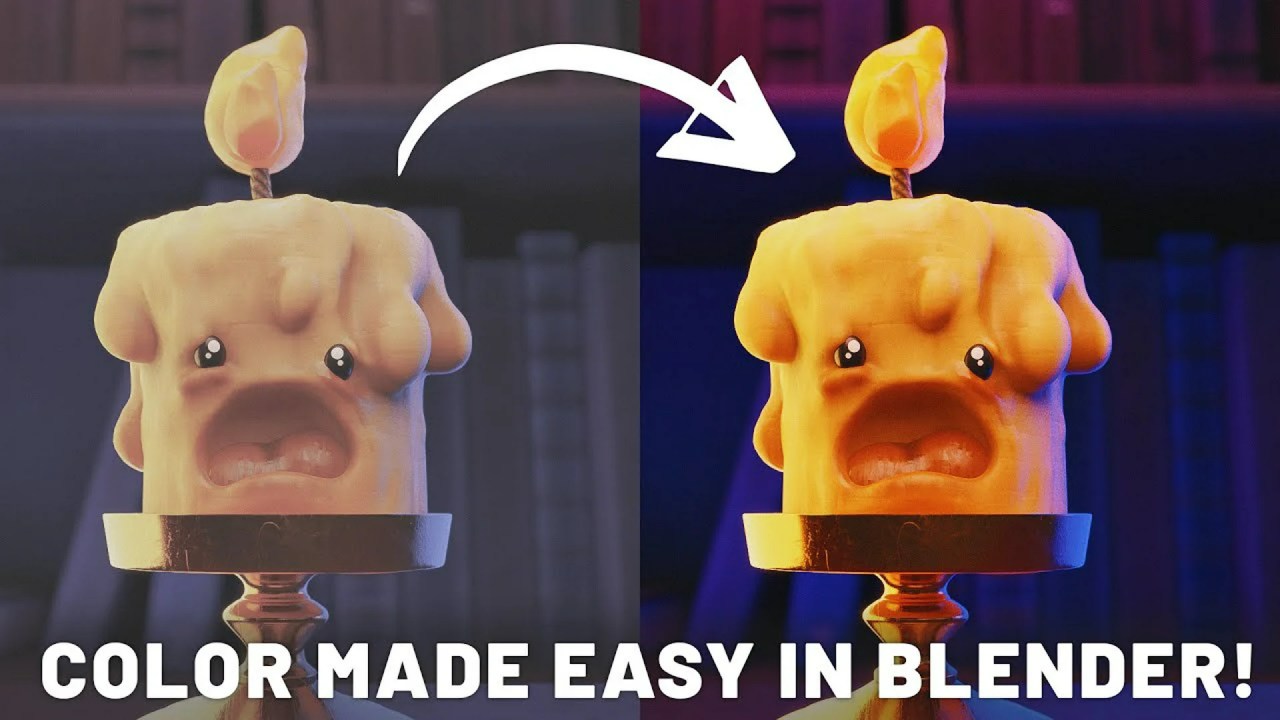
Explore the physics of light beneath surfaces with Richard Yot’s free Subsurface Scattering primer. This article distills the core ideas, highlights practical shading tips, and points to accessible, platform-agnostic training.
Richard Yot, a respected educator in the 3D shading space, introduces viewers to the often-muzzy world of Subsurface Scattering (SSS) in Understanding Sub-Surface Scattering Part 1. With a clear, approachable voice, he guides artists through the real-world physics behind translucency, helping them replace guesswork with a solid mental model. The video is a practical primer for anyone aiming to improve their material realism, from skin to marble to milk.

What you’ll learn from the creator’s approach
In this primer, the author breaks down light-matter interactions into four outcomes: specular reflection, diffuse reflection, transmission (refraction), and absorption. The emphasis is on how electrons in different materials affect these outcomes, which in turn shapes how we simulate translucency in shading workflows. By framing the problem in physical terms, Yot helps artists predict how material structure influences SSS behavior.
Key takeaways include:
– The distinction between dielectric (non-conducting) materials and metals, and how their electron density drives light interaction.
– How surface versus subsurface interactions lead to different reflection and diffusion effects.
– The role of structure: crystalline versus amorphous, and why each yields different scattering distances and diffusion patterns.
– The idea that SSS is often a function of density and the way light travels through tiny, translucent fragments or suspended particles.
For those who want a concise mental model, the video stresses identifying the primary controls that govern SSS in most shading systems—without getting lost in every setting a renderer offers.
If you’d like to dive deeper with the creator’s own course, his free training material is explicitly designed to be software-agnostic, helping artists translate the same physical principles across engines like Blender Cycles, Octane, Vray, and Modo. You can explore the full training and related assets on the official page: Richard Yot’s Understanding Sub-Surface Scattering
Structure matters: crystalline versus amorphous, and why it matters for SSS
The video distinguishes two fundamental material architectures that drive SSS behavior:
- Crystalline structures: These have a rigid lattice, as seen in materials like quartz or salt. In such materials, light scattering emerges from many small, ordered interactions, which can shorten the effective scattering distance as crystals are densely packed.
- Amorphous structures: Lacking a long-range order, these materials (including many liquids and non-crystalline solids) rely on dispersed particles or emulsions to create diffusion. The scattering distance is influenced by particle density and the nature of the suspended matter.
In translucent organic materials—like skin, fruit, and plant tissues—the photons typically interact with water-filled cells and semi-transparent membranes, producing SSS effects characteristic of emulsions. The overall translucency is a balance between how transparent the medium is and how much it diffuses light via internal scattering.
A practical note: not all transparent materials exhibit SSS. For example, pure glass shows minimal subsurface scattering; photons mostly reflect at the surface, with only a small amount of surface-based reflection.
How to apply these ideas in your shading workflow
The training emphasizes a platform-agnostic mindset: start with the physical model, then map that understanding to the controls you actually use in your renderer. Here are a few guidance points that echo the video’s approach:
- Focus on the ratio of transparency to diffusion to determine perceived translucency.
- Use density and scattering distance as your core levers for SSS, rather than chasing an endless suite of knobs.
- When working with materials like skin or fruit, think in terms of an emulsion-like diffusion process or granular scattering in semi-crystalline contexts, depending on the real-world analog.
For practitioners aiming to learn by example, the training provides practical walkthroughs across engines, showing how the same physical behavior translates into different shading pipelines. The course is publicly accessible and explicitly designed to remove guesswork.
Free training and how to access it
A standout aspect of this resource is its accessibility. The core training is offered for free, with downloadable assets and video files available through multiple cloud links. Specifically, the creator provides Dropbox and Google Drive downloads for both assets and video files, making it easy to follow along at your own pace.
- Free training: Understanding Sub-Surface Scattering (no-cost entry)
- Downloads: Assets and video files (via Dropbox and Google Drive)
- Sign-up for updates: Optional mailing list for new training and promotions
Links to the free training and materials are hosted on the author’s site, and the content is designed to be applicable regardless of the host application. This makes Richard Yot’s approach particularly attractive for students and professionals who work across several renderers. See the official page for the full details and access: Understanding Sub-Surface Scattering.
A few practical steps to get started
- Watch Part 1 to build your mental model of SSS and related light interactions.
- Note how density and micro-structure influence diffusion distance in your test scenes.
- Try a simple translucent material (like a sugar cube or milk) and experiment with density and transmission parameters to observe how the subsurface light changes.
- Apply the same principles to more complex materials (skin, fruit, leaves) by adjusting the balance between transparency and diffusion to achieve realistic translucency.
If you’re curious about the broader context of SSS in modern rendering, you can consult related introductory resources, then return to Yot’s method for a practical, hands-on understanding. The combination of physics-based insight and practical exercises makes the training a valuable starting point for aspiring shading artists.
Conclusion: clarity, consistency, and confidence in translucent shading
Understanding Subsurface Scattering is less about memorizing every control and more about grasping how light behaves beneath surfaces. Richard Yot’s accessible, physics-grounded approach helps artists cut through confusion and build accurate, believable materials. By coupling a solid mental model with practical, engine-agnostic guidance—and by offering free training and downloadable assets—this resource stands out as a friendly, empowering entry point for both beginners and seasoned practitioners.
For readers seeking a structured path into SSS, revisiting the Part 1 video and exploring the downloadable course materials is a strong next step. And as you apply these concepts to your own projects, you’ll likely notice faster iteration, more consistent results, and a deeper intuition for why translucency behaves the way it does in real-world materials.
Wrapping up, Richard Yot’s physics-first take on Subsurface Scattering gives you a reliable mental model you can apply across engines and materials. To explore how these ideas translate in your own toolchain, check out our Blender-focused Texturing & Shading coverage and the Unreal Engine Materials & Shaders hub for cross-pipeline insights.
Sources:
Understanding Sub-Surface Scattering Part 1
Understanding SSS — Richard Yot