Content creators often rely on intuition, but composition offers foundational rules to intentionally guide the viewer’s eye, set the mood, and ensure maximum impact. Liesbet Segaert breaks down essential techniques, from using value contrast and color complements to mastering camera angles and incorporating texture.
Magnopus’ Liesbet Segaert has delivered an invaluable guide for artists wondering why some visuals instantly look “amazing.” You can read the full guide here. Segaert, writing for Magnopus—a studio known for pioneering interactive and virtual production projects—explores the underlying theory that transforms a collection of elements into a compelling image: visual composition. This essential skill allows creators, whether working in film, 2D art, or 3D gaming, to intentionally control readability, mood, and interest.
Directing the Viewer’s Eye
The primary goal of strong composition is guiding the viewer’s attention. Segaert emphasizes that our eyes are naturally drawn to high-value contrast. By converting an image to black and white, artists can analyze value differences. For instance, in scenes from games like *Ori and the Blind Forest*, high contrast between foreground characters and the background instantly establishes the focal point. Fog is suggested as a powerful tool to reduce background contrast.
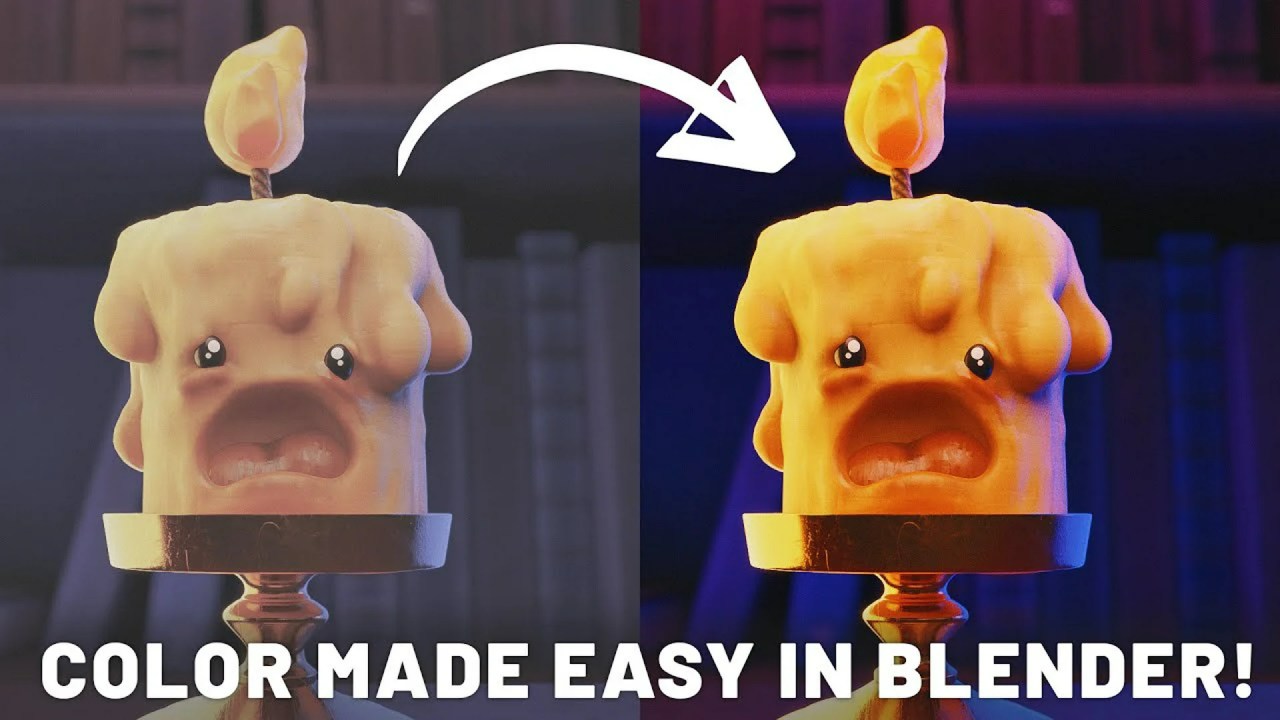
Focus is not just about luminosity; color contrast is equally vital. Using complementary colors, such as the blue/orange contrast seen in many dramatic scenes, forces key elements to pop. The guide references *Hades*, noting how bright, saturated main elements stand out against a dark, muted background, creating a visual hierarchy where the player’s focus lands first on the enemies, then on environmental markers.
Other simple yet profound methods for directing focus include:
- Brightness: Literally shining a light on the subject.
- Shape: An element that doesn’t fit the landscape (e.g., a strange machine) instantly attracts attention.
- Lines: Environmental features, like the branches in *Kena: Bridge of Spirits*, can act as arrows, pointing directly toward the subject.
- Interrupted Patterns: A focal point naturally emerges when a sequence is broken by an odd element.
Compositional Tools: Lines, Angles, and Space
Segaert dives into specific compositional frameworks that dictate story and mood:
Harnessing the Power of Lines
Lines are fundamental in guiding the gaze. Concentric lines, as used in games like *Beat Saber*, can hypnotize the viewer and center their attention. Furthermore, the type of line changes the mood: horizontal lines evoke calm and serenity (*Planet of Lana*), vertical lines appear imposing, making the subject seem small or the task daunting (*The Witcher 4*), and curved lines can feel elegant or chaotic.
Mastering Camera Angles
The camera angle dramatically shifts the subject’s perceived power. A neutral eye-height angle feels normal, but placing the camera lower makes a character look imposing and intimidating. Conversely, a high camera angle diminishes the subject, suggesting they are humbled, in danger, or being observed—a technique that builds tension.
Utilizing Positive and Negative Space
Composition relies on balancing positive space (the subject) and negative space (the rest of the frame). Standard framing typically dictates using “lead room” or “looking room,” ensuring more space in front of the character than behind them to feel natural. Intentionally breaking this rule, like having a character look into a smaller area of the frame, instantly creates tension or unease. When used effectively, a large amount of negative space can establish scale or make a scene feel serene.
Advanced Effects: Depth, Grids, and Texture
Composition extends beyond simple placement to include post-processing and aesthetic frameworks.
Depth of Field and Layering
Controlling the depth of field is a powerful storytelling tool. A narrow depth of field forces focus onto a single object (like a phone instead of a face), while a large depth of field can establish the massive scale of a city or army. Segaert also stresses the importance of layered shots (foreground, midground, background) to create visual depth, making the image feel more dimensional and engaging.
Overlaying Composition Grids
For centuries, artists have used mathematical frameworks. The article discusses the use of the Fibonacci spiral in art and nature, noting its pleasing, orderly dynamism. It often simplifies into the ubiquitous Rule of Thirds. Other grids like the Dynamic Symmetry grid and the Golden Triangle also help align complex compositions for balance and structure. For those wanting to explore the mathematical beauty behind these concepts, Segaert provides a resource on the Fibonacci sequence.
Texture and Post-Processing
Texture goes beyond visual fidelity; it evokes other senses—the softness of fabric or the warmth of a fire. *Cyberpunk 2077* uses rich textures to convey a grimy, polluted world, while lighting amplifiers like mist, god rays, and particles add layers of interest. Furthermore, lens effects like bokeh and bloom—often mimicked via post-processing in 3D engines—are critical for aesthetic quality, adding drama and intensity. Director Bertrand Mandico intentionally uses filters in films like The Wild Boys to achieve a distinct, textural look straight from the camera.
Conclusion
This is just a short overview of the comprehensive article “Why it looks ‘amazing’: The foundational rules of visual composition” written by Liesbet Segaert for Magnopus. You can read the full article here.
Effective composition is rarely accidental; it is the result of mindful placement and intentional visual choices. Whether directing focus, setting a mood, or simply ensuring visual appeal, the foundational rules laid out by Liesbet Segaert provide artists with a toolkit to achieve truly compelling imagery.
If you are looking to integrate these artistic principles into your projects, don’t miss our detailed guides on how to learn more about maximizing your render quality in Blender or discover new techniques for Lighting & Rendering in Unreal Engine.
Source:
Why it looks ‘amazing’: The foundational rules of visual composition — Magnopus